

Views: 0 Author: Site Editor Publish Time: 2026-07-08 Origin: Site


Engineering and procurement teams face a constant manufacturing dilemma. You need to scale production of highly complex metal components. You cannot afford exponential increases in cost or cycle times. Traditional methods often hit a hard ceiling when volumes surge. CNC machining becomes cost-prohibitive for intricate geometries because multi-axis setups and long cycle times drain resources. Precision investment casting struggles to reproduce sharp micro-features reliably. It also typically demands expensive secondary finishing operations to meet specifications. These limitations force teams to choose between design compromises and shrinking profit margins.
Metal Injection Molding bridges this gap perfectly. It stands out as a highly viable commercial solution for producing small, complex geometries. You achieve high repeatability without sacrificing the mechanical integrity of wrought metal. In this article, you will learn exactly when to transition to this process. You will see how it compares to legacy methods and discover what criteria define a successful production strategy.
MIM achieves the lowest per-part cost for complex metal components when annual production volumes exceed 10,000–20,000 units.
The process consistently holds standard tolerances of ±0.3% to ±0.5%, with secondary operations available for ultra-tight requirements.
Ideal part candidates are under 100 grams, fit in the palm of a hand, and feature geometries that would require multiple CNC setups.
Partnering with the right Metal Injection Molding manufacturer early in the Design for Manufacturing (DfM) phase mitigates upfront tooling risks and ensures predictable shrinkage.
CNC machining excels at low-volume prototyping and simple geometries. However, it fails to scale efficiently for highly intricate designs. Complex metal parts demand multi-axis machining centers. These machines require extensive setup times, specialized fixtures, and constant human oversight. Tool wear becomes a severe issue when cutting hard alloys like stainless steel or titanium. Frequent tool replacements slow down production lines and increase overhead. Subtractive manufacturing also generates massive amounts of scrap material, draining your raw material budget.
The injection molding process provides a sophisticated alternative. It replicates the high-speed scalability of plastic injection molding. You can shoot thousands of parts per day using multi-cavity molds. The process combines fine metal powders and a thermoplastic binder. This creates a flexible, flowable feedstock. Machines inject this feedstock into precise steel molds under high pressure. After molding, chemical and thermal processes remove the binder. The remaining metal powder is then sintered near its melting point. The final product delivers the exceptional mechanical properties of solid wrought metal.
Part consolidation serves as a major value driver for this technology. Engineers often design complex assemblies using multiple machined parts. These separate parts require distinct manufacturing runs. They demand additional fasteners, precision welding, or labor-intensive assembly steps. A skilled engineering team can redesign these multi-part assemblies into a single consolidated component. Imagine a surgical jaw tool. Historically, teams machined the base, cut the teeth separately, and welded them together. Now, you can produce the entire toothed jaw as a single solid piece. This approach eliminates entire sub-assemblies from your bill of materials. You significantly reduce supply chain friction. You also cut down on assembly labor and inventory management headaches. The ability to mold undercuts, internal threads, and irregular shapes in one shot transforms how you approach product design.
Defining the breakeven point requires analyzing your production volume carefully. The process requires a high initial tooling investment. Creating precision steel molds involves significant engineering time and resources. However, the piece-part price drops dramatically as volumes increase. The cost-crossover point compared to CNC machining typically occurs at the 10,000 to 20,000 annual unit mark. Beyond this threshold, the amortized tooling cost becomes negligible. You save immensely on reduced cycle times, automated production, and eliminated manual labor.
Material utilization heavily influences this cost dynamic. CNC machining relies entirely on subtractive processes. You start with a solid block of metal and carve away material until the part emerges. This generates substantial scrap. Aerospace and medical sectors suffer the most from subtractive scrap. Cutting a 10-gram medical implant from a 50-gram titanium block wastes 80% of your raw material. Wasting expensive alloys destroys profit margins. The injection molding approach operates with additive-like efficiency. The process uses only the exact material required to fill the mold cavity. The gating and runner systems can often be ground up and recycled. This near-net-shape capability minimizes waste and maximizes your material budget.
When comparing processes for small parts, precision investment casting often falls short. Casting struggles to maintain tight tolerances on micro-components. It frequently produces rough surface finishes requiring heavy secondary polishing. Casting also introduces risks of internal porosity. Air pockets weaken the structural integrity of the final part. The powder-based injection approach outpaces investment casting effortlessly for micro-parts. You achieve an excellent surface finish straight from the mold. The high-pressure injection ensures superior structural density. You completely bypass the porosity issues common in traditional casting methods.
| Manufacturing Process | Ideal Volume (Units/Year) | Material Waste | Geometric Complexity Handling |
|---|---|---|---|
| CNC Machining | 1 - 10,000 | High (Subtractive) | High Cost Penalty |
| Investment Casting | 1,000 - 50,000 | Moderate | Limits Micro-features |
| Metal Injection Molding | 10,000+ | Very Low (Near-Net-Shape) | No Cost Penalty |
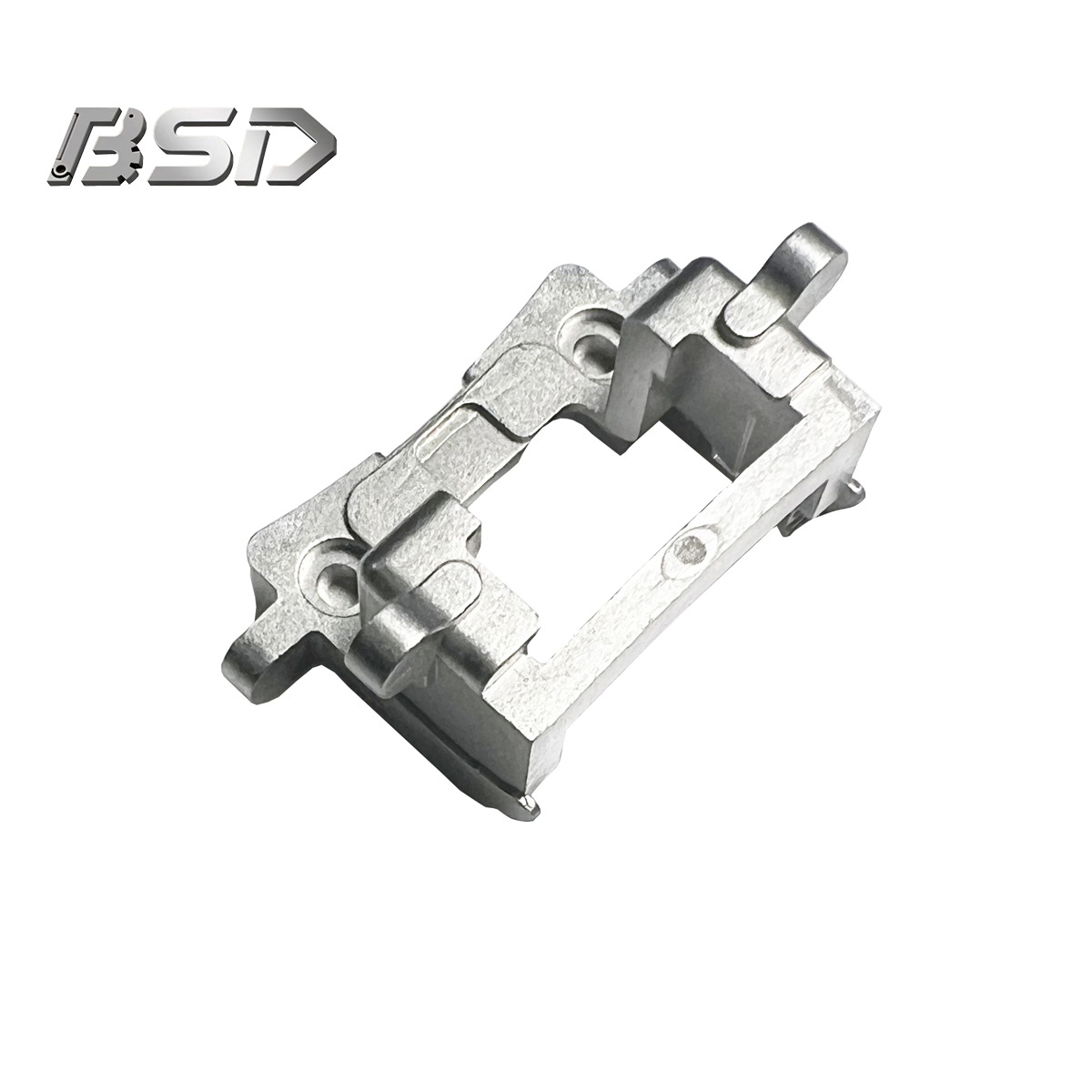
Engineers must set realistic expectations regarding dimensional accuracy. Objectively, baseline standard tolerances range from ±0.3% to ±0.5% of nominal dimensions. You should not over-promise capabilities. If a specific feature demands extreme precision, such as ±0.1%, the process will require secondary machining. Recognizing this distinction prevents costly redesigns late in the production cycle. Most standard applications perform perfectly within the baseline tolerance range straight out of the furnace.
Density plays a crucial role in mechanical integrity. Sintered components consistently achieve 95% to 99% of theoretical material density. This impressive density metric directly impacts tensile strength, fatigue resistance, and hardness. Parts perform similarly to those machined from raw bar stock. They withstand rigorous stress testing and perform reliably in demanding environments like automotive engines or medical devices. The minimal remaining porosity exists as isolated, microscopic spherical pores. These closed pores do not compromise the structural integrity or leak-tightness of the component.
Batch-to-batch repeatability forms the backbone of mass manufacturing. You need absolute assurance that part number one million matches part number one. Modern automated molding machines monitor temperature and pressure continuously. This prevents variations during the critical injection phase. Controlled-atmosphere sintering furnaces regulate heating and cooling profiles with extreme precision. They eliminate oxidation and ensure uniform shrinkage across the entire batch. This powerful combination of automated molding and thermal control ensures consistency across millions of manufactured parts.
Understanding the process limitations builds trust and prevents project failures. Every manufacturing technology has a sizing sweet spot. This technology is rarely viable for parts weighing over 100 grams. Components with thick, bulky cross-sections pose significant challenges. When parts exceed 100 grams, gravity begins to distort the softened binder during the initial thermal heating phase. Thick walls also trap the polymer binder during the debinding phase. This trapped binder can cause blistering or internal cracking during final sintering. You achieve the absolute best results with parts that easily fit in the palm of your hand.
Following strict Design for Manufacturing (DfM) rules ensures successful outcomes. Your engineering team must adhere to specific requirements before cutting steel for molds.
Uniform Wall Thicknesses: You must maintain consistent wall thicknesses throughout the part. Uneven walls cool and shrink at different rates. This leads to warping and dimensional distortion during sintering. Coring out thick sections helps maintain mass uniformity.
Strategic Gating and Ejector Pins: Engineers must carefully place gates and ejector pins. The gate is where feedstock enters the mold. It leaves a small blemish. You should position it on non-critical or hidden surfaces. Ejector pins push the part out of the mold. They also leave slight witness marks. Proper placement prevents cosmetic or functional interference.
Draft Angles and Radii: Molds require draft angles to allow smooth part ejection. You must also avoid sharp internal corners. Adding generous radii reduces stress concentrations and prevents cracking as the part shrinks.
Managing shrinkage represents the biggest hurdle in tooling design. The prominent challenge is the massive volume change during production. Removing the polymer binder causes the component to shrink by approximately 15% to 20% during sintering. This sounds alarming, but it is highly controlled. Tooling engineers calculate this shrinkage factor predictably. They design the initial mold cavity 15% to 20% larger than the final specified dimensions. By strictly controlling feedstock formulation and furnace temperatures, they ensure the part shrinks precisely into its final tolerance window. Working collaboratively with an experienced Metal Injection Molding manufacturer mitigates these engineering risks entirely.
Selecting the right production partner dictates the success of your manufacturing strategy. You should aggressively evaluate their end-to-end capabilities. Look for suppliers who manage compounding, molding, debinding, and sintering under one roof. In-house compounding means they mix their own custom feedstock. This allows them to adjust binder ratios for optimal flow characteristics. Keeping all thermal processing in-house prevents quality fragmentation. When a supplier outsources sintering, they lose control over the most critical dimensional phase of production.
Secondary operations separate average suppliers from industry leaders. While molding handles the vast majority of the part's geometry, some features require extra attention. A highly competent Metal Injection Molding manufacturer offers comprehensive in-house secondary services. They should provide CNC machining for ultra-tight tolerances. They should offer coining presses to flatten parts and correct minor warpage. In-house heat treatment capabilities allow them to harden components immediately after sintering. Consolidating these operations reduces lead times and simplifies your vendor management significantly.
Compliance and metrology serve as non-negotiable requirements for high-stakes industries. You must stress the importance of robust quality management systems. Look for ISO certifications relevant to your specific sector. Medical device teams should demand ISO 13485 certification. Automotive engineers must require IATF 16949 compliance. Advanced inspection capabilities verify internal and external quality. Coordinate Measuring Machines (CMM) ensure complex geometries meet exact print specifications. X-ray scanning technology detects microscopic internal voids before parts ever ship. These stringent metrology practices guarantee you receive flawless components ready for assembly.
This advanced manufacturing process is not a blanket replacement for traditional machining. Instead, it serves as a highly targeted solution for high-volume, high-complexity, small-footprint parts. It excels when you need to merge intricate geometric designs with mass production scalability. By understanding the optimal volume thresholds and adhering to specific design rules, you can dramatically lower per-part costs without compromising mechanical performance.
Your next step involves practical validation. Encourage your engineering and purchasing teams to submit 3D CAD models to a qualified manufacturing partner. Request a comprehensive DfM feasibility review to identify potential design optimizations. Conduct a thorough cost-crossover audit against your current CNC or precision casting expenditures. Taking these proactive steps early ensures you finalize the most efficient, reliable, and profitable manufacturing strategy for your project.
A: You can use a wide variety of materials. The process excels with stainless steels like 316L and 17-4PH, which offer excellent corrosion resistance and strength. Low-alloy steels work well for structural components. Titanium is highly sought after for lightweight, medical, and aerospace applications. You can also utilize specialized magnetic alloys for electronic and sensor components.
A: Tooling offers an exceptionally long lifespan. A typical steel mold lasts between 150,000 to 300,000+ shots. The exact duration depends heavily on the abrasiveness of the chosen material and regular mold maintenance. This extended lifespan makes amortizing the initial tooling investment highly efficient across large production runs.
A: Yes, absolutely. Sintered components behave chemically and mechanically just like standard wrought metals. You can readily weld them to other metal assemblies. They accept various surface platings and cosmetic coatings without issue. You can also subject them to standard heat treatment processes to significantly increase their core hardness and tensile strength.


