

Views: 0 Author: Site Editor Publish Time: 2026-11-18 Origin: Site


Many engineers meticulously design piping layouts and specify motor sizes. Yet, they often overlook the specific abrasive and chemical properties of the pumped fluid. This critical oversight frequently leads to premature wear, catastrophic pump failure, and exorbitant downtime. Selecting the wrong material based solely on initial procurement costs rather than fluid dynamics creates a cascading effect of mechanical issues. Ultimately, understanding how to match metallurgical properties to specific fluid conditions is the definitive strategy for engineering a reliable, long-lasting pumping system.
Fluid Properties Dictate Material: The chemical composition, operating temperature, dynamic viscosity, and solid particulate content of your process medium establish the empirical baseline for selecting an optimal rotor alloy.
Common Materials Have Specific Niches: Standard gray iron serves exceptionally well for basic, clean-water municipal applications. In stark contrast, austenitic stainless steel and specialized bronze alloys are absolute necessities for corrosive chemical processing or high-salinity marine environments.
Geometry Meets Material: Fluid-solid coupling dynamics directly influence mechanical wear and tear. Even the most robust super-alloy cannot compensate for improper blade profiling or incorrect geometric specifications.
Manufacturing Matters: Utilizing high-quality precision pump components, specifically those manufactured through advanced subtractive milling methods, provides tighter dimensional tolerances. Consequently, this reduces operational vibration and exponentially extends the mean time between failures.
The centrifugal pump impeller functions as the primary rotational heart of the system. It is responsible for transferring mechanical energy from the drive motor into kinetic energy within the fluid. As this component rotates at blistering speeds, its precisely angled vanes accelerate the fluid radially outward from the central eye to the outer diameter. This continuous mechanical action creates a localized pressure differential that forcefully drives the liquid through the industrial piping network.
Because this rotating core remains in constant, high-velocity contact with the pumped medium, its material composition is of paramount importance. It acts as the frontline defense, absorbing the maximum physical impact and chemical stress generated within the volute casing. Selecting an incompatible metal often results in severe operational consequences. These include rapid localized corrosion, abrasive gouging of the blade leading edges, and ultimate mechanical fatigue. In continuous-duty industrial scenarios, such failures translate directly into unscheduled facility shutdowns, compromised environmental safety, and heavily inflated maintenance budgets.
To engineer a truly resilient fluid handling system, plant operators and reliability engineers must thoroughly analyze distinct fluid characteristics before specifying a metallurgical makeup.
The chemical aggressiveness of a fluid is primarily measured by its pH level, alongside the concentration of specific corrosive ions such as volatile chlorides or harsh sulfates. Highly acidic liquids with a pH below 7 and highly alkaline solutions with a pH above 7 actively degrade standard ferrous metals. This degradation occurs through uniform surface dissolution or insidious localized pitting.
Imagine a chemical processing plant attempting to transfer highly concentrated sulfuric acid using a standard cast iron rotor. The aggressive chemical attack would strip away the metal within hours, altering the blade geometry and drastically reducing hydraulic efficiency. For such harsh environments, engineers must specify materials capable of forming a passive oxide layer to halt chemical degradation. High-grade stainless steels or engineered polymers are excellent choices here. Consulting standard chemical compatibility charts is a non-negotiable step in this engineering process.
Fluids carrying suspended solids inflict severe mechanical damage on internal pump internals. These solids range from fine, abrasive silica sand to large, jagged rocks. When evaluating slurry applications, it is crucial to differentiate between sliding abrasion and impact wear.
Sliding abrasion occurs when fine slurries continuously scrape against the shrouds and vanes. This condition requires alloys with exceptionally high surface hardness to resist deep gouging. Conversely, impact wear manifests when large, heavy solids strike the leading edges at extreme velocities. This violent condition demands a material with high impact toughness to prevent brittle fracture or catastrophic chipping. Without the right hardened alloy, the solid concentration will erode standard metals rapidly, leading to a complete loss of structural integrity and violent rotor imbalance.
The ambient and operating temperatures of the pumped medium directly impact the mechanical properties of the specified alloy. Extreme heat significantly reduces the tensile and yield strength of many common metals and industrial plastics. Furthermore, elevated temperatures increase the vapor pressure of the fluid. This makes the system highly susceptible to destructive cavitation if the Net Positive Suction Head Available drops below critical thresholds.
In addition, applications involving rapid, cyclical temperature fluctuations can induce severe thermal shock. Different materials possess varying coefficients of thermal expansion. Therefore, an impeller that expands or contracts too rapidly relative to the heavy pump shaft can cause internal rubbing, catastrophic bearing overload, or micro-cracking in brittle casting alloys.
Viscosity measures the inherent resistance of a fluid to flow. Pumping thick, sticky, or highly emulsified mediums creates immense hydraulic drag and intense mechanical shear stress on the rotating blades. Common examples include heavy crude oils, dense syrups, or wastewater sludge.
As viscosity increases, the disk friction on the shrouds rises exponentially. This demands significantly more shaft torque from the motor. This elevated mechanical load requires an alloy with superior yield strength to prevent vane deflection or long-term fatigue failure. Standard cast materials often flex under the heavy shear stress of high-viscosity fluids, inevitably leading to microscopic stress fractures at the root of the vanes.
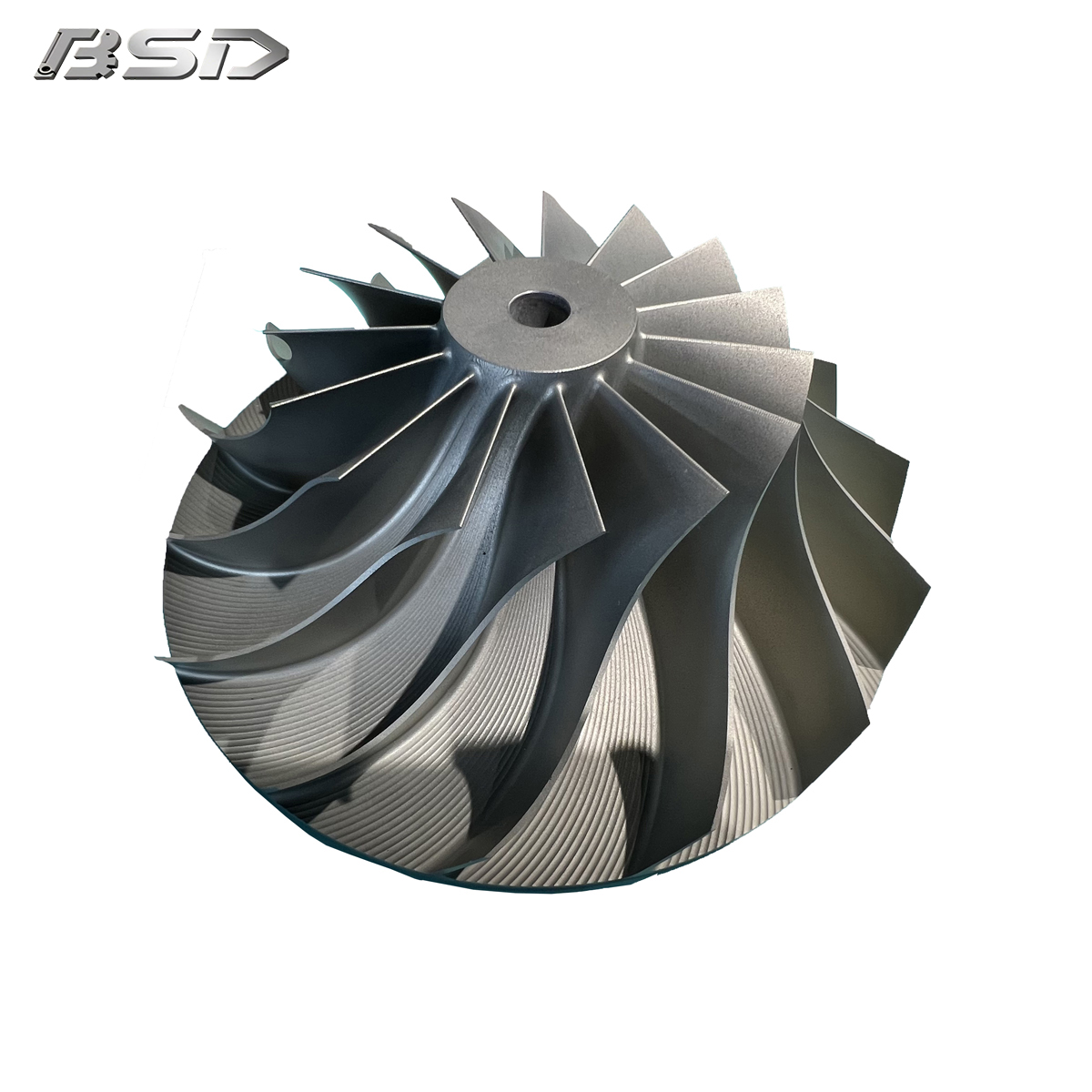
Based on decades of empirical data and standard industrial practices, specific metallurgical profiles have proven highly effective for targeted operational environments.
Highly cost-effective and boasting excellent machinability, cast iron possesses good inherent vibration-damping characteristics. It offers adequate tensile strength for standard pressure ratings. Specifically, it remains the default standard for clean water, treated municipal wastewater, and standard industrial cooling loops where the pH remains strictly neutral and abrasive particulates are practically nonexistent.
Stainless steel provides exceptional corrosion resistance due to the rapid formation of a chromium oxide passive layer. Grade 316 includes molybdenum for enhanced resistance to chloride-induced pitting. Furthermore, Duplex stainless steel offers a mixed austenitic-ferritic microstructure. This yields twice the mechanical strength of standard grades along with superior stress-corrosion cracking resistance. These alloys are heavily favored in chemical processing, pharmaceutical manufacturing, and harsh desalination plants.
Bronze variations, such as aluminum bronze or tin bronze, possess natural anti-sparking properties. This makes them exceptionally safe for explosive petrochemical environments. They also exhibit natural biocidal properties and outstanding resistance to saltwater corrosion. Consequently, they are the premier choice for marine environments, seawater cooling systems, and commercial offshore platforms.
High-chrome white iron typically contains high levels of chromium and offers extreme surface hardness that often exceeds a 600 Brinell Hardness Number. This dense microstructure provides unmatched resistance to sliding abrasion and moderate impact wear. It is exclusively reserved for heavy mining operations, dredging, ash handling, and highly abrasive slurry applications where standard metals would literally wash away within days.
Recent market analyses and engineering reports highlight a definitive shift in the fluid handling sector. Plant operators are rapidly moving away from disposable, off-the-shelf cast components. Instead, there is a massive surge in demand for highly engineered, application-specific metallurgy. This shift is primarily driven by strict global energy efficiency mandates and a sharper focus on the Total Cost of Ownership.
Modern reliability engineers are leveraging Computational Fluid Dynamics and Finite Element Analysis to simulate wear patterns before a single piece of metal is cut. This digital twin approach reveals that upgrading to advanced super-alloys and utilizing precision subtractive manufacturing prevents unexpected breakdowns. More importantly, it significantly reduces the electrical footprint of the pump over its lifecycle. Industry leaders now recognize that investing in custom-milled rotors is the new standard for maintaining uptime in critical processing facilities.
To streamline the complex engineering decision-making process, the following matrix aligns common industrial fluid classifications with their empirically recommended metallurgical pairings.
| Fluid Classification | Primary Challenge | Recommended Material | Alternative / Upgrade |
|---|---|---|---|
| Clean Water & HVAC | Continuous duty, low procurement cost | Standard Cast Iron | Bronze due to its anti-rust properties |
| Wastewater & Sewage | Mild abrasives, wildly variable pH | Ductile Iron | 304 Stainless Steel |
| Saltwater & Seawater | High chlorides, severe biofouling | Aluminum Bronze | Super Duplex Stainless Steel |
| Acids & Harsh Chemicals | Aggressive chemical corrosion | 316L Stainless Steel | Engineered Polymers or Hastelloy |
| Heavy Slurries & Mining | High sliding abrasion, impact wear | High-Chrome White Iron | Heat-Treated Tool Steel |
| Viscous Oils & Syrups | High mechanical shear stress and drag | Forged Carbon Steel | 316 Stainless Steel |
Material specification represents only half of the hydraulic equation. The geometric design heavily dictates how destructive fluid forces distribute across the metallic surface.
Fluid-solid coupling refers to the dynamic, real-time interaction between the violently moving fluid and the solid internal structure. Uneven fluid flow inherently creates localized high-pressure zones on the blades. If the chosen material lacks the requisite fatigue strength to withstand these cyclical pressure pulsations, microscopic fractures will initiate at the stress concentration points. Proper blade profiling ensures an even distribution of hydraulic loads, thereby maximizing the fatigue life of the material.
The choice of metal must perfectly align with the structural design. Open impellers feature vanes attached directly to a central hub without protective outer shrouds. While ideal for stringy, fibrous solids and highly viscous fluids, they subject the individual vanes to much higher bending moments. This demands alloys with supreme tensile strength. In contrast, closed impellers feature vanes enclosed between two solid shrouds. This design offers superior hydraulic efficiency for clean, high-pressure liquids but remains highly prone to clogging if introduced to large solids.
When handling dense, viscous media, standard geometries almost always fail. Specific design modifications are absolutely necessary to minimize fluid shear. These include heavily swept-back blades, reduced vane counts, and widened discharge channels. Combining these optimized geometries with rigid, high-yield-strength block materials prevents blade deflection and maintains high hydraulic efficiency.
In standard industrial applications, traditional sand-cast impellers are ubiquitous due to their mass-production economy. However, as fluid conditions become increasingly severe, the inherent limitations of cast components become glaringly apparent. Traditional casting processes frequently introduce internal micro-porosity, uneven cooling stresses, and surface inconsistencies that severely compromise mechanical integrity.
This is precisely where modern subtractive manufacturing completely changes the paradigm. For specialized, high-stakes applications, relying on a custom CNC machined impeller ensures exact geometric adherence to the original hydraulic CAD design. By utilizing custom 5-axis CNC machining centers, manufacturers can carve complex vane geometries directly from solid forged billets. This eliminates the structural vulnerabilities associated with molten casting, resulting in a highly durable, flawlessly balanced component.
Centrifugal pumps typically operate at blistering rotational speeds, often between 1,500 and 3,600 RPM. At these extreme velocities, even a microscopic weight disparity across the diameter generates massive radial loads. These unbalanced forces transfer directly to the pump shaft, destroying bearings and mechanical seals prematurely. CNC machining achieves exceptionally tight dimensional tolerances, often within micrometers. This exact precision ensures uniform mass distribution, allowing these machined parts to easily meet ultra-precise ISO 1940-1 G2.5 balancing standards straight off the machine.
Casting requires metals to be heated to a molten state, restricting material selection since advanced alloys often exhibit poor flow characteristics or suffer from severe shrinkage. CNC machining bypasses this hurdle entirely. It allows for the utilization of exotic, high-performance billet materials like pure Titanium, Super Duplex Stainless Steel, and proprietary high-nickel super-alloys. Furthermore, because these parts are carved from forged blocks, they possess a superior, uniform grain structure that provides exceptional resistance to metal fatigue.
Surface roughness plays a critical role in fluid dynamics. Cast internals inherently feature a textured surface due to the sand molds, creating microscopic turbulence within the boundary layer of the fluid. This increases friction and drastically decreases overall efficiency. CNC milling achieves incredibly smooth surface finishes, often reaching Ra 0.8 or better, without the need for manual polishing. This optimized surface minimizes fluid friction, preventing the accumulation of sticky materials and directly reducing electrical power consumption.
| Feature | Traditional Cast Impeller | CNC Machined Impeller |
|---|---|---|
| Material Structure | Prone to micro-porosity and internal voids. | Uniform forged grain structure; zero internal voids. |
| Surface Finish | Rough, requiring secondary manual polishing. | Exceptionally smooth Ra 0.8 finish, improving efficiency. |
| Dynamic Balance | Often requires extensive post-cast balancing weights. | Inherently balanced to ISO 1940-1 G2.5 standards. |
| Material Options | Strictly limited by the flowability of molten metal. | Compatible with almost any machinable super-alloy or titanium block. |
Even the most robust, space-age materials eventually succumb to the relentless forces of fluid dynamics, aggressive chemical attack, and mechanical friction. Implementing a predictive maintenance strategy is essential for plant operators to identify wear long before it cascades into catastrophic equipment failure. Upgrading your internal rotating components to a high-performance material when diagnostic symptoms appear can resolve recurring maintenance headaches permanently.
The most immediate and quantifiable indicator of internal degradation is a measurable deviation from the published performance curve of the manufacturer. If the motor draws the correct amperage but the discharge pressure has plummeted, the internal geometry is likely compromised. As abrasive slurries wear down the outer diameter of the blades, the centrifugal force generated decreases exponentially. This drastically drops system efficiency.
A healthy, well-maintained pump operates with a consistent, predictable hum. Sudden spikes in noise or radial vibration are primary indicators of internal distress. Condition monitoring tools can detect specific vibration frequencies. For instance, a 1X running speed vibration indicates the center of gravity has shifted due to uneven material loss. If the pump sounds as though it is violently churning gravel, it is experiencing cavitation. This is a destructive phenomenon where collapsing vapor bubbles physically tear microscopic chunks of metal from the surface.
During a scheduled midnight maintenance teardown, visual inspections provide undeniable evidence of material incompatibility. Maintenance crews might discover razor-thin trailing edges, which indicate general chemical corrosion actively dissolving the metal. Deep, localized gouges point to mechanical erosion from suspended rocks. Meanwhile, spongy, pitted surfaces near the blade tips are the classic hallmark of long-term, unmitigated cavitation damage.
Matching your pump internal metallurgy to the specific fluid conditions it handles is the most critical step in system design and proactive maintenance. Whether you are dealing with highly acidic chemicals, abrasive mining slurries, or dense viscous oils, understanding the empirical limits of different alloys ensures operational stability. Investing in proper manufacturing methods and superior materials upfront prevents massive, compounding costs in the future. Quality, precision-engineered parts will consistently outlast cheap, off-the-shelf cast alternatives.
Are you ready to eliminate recurring maintenance failures and optimize your fluid handling system? Evaluate your current hydraulic performance today. Explore the high-performance, custom-manufactured solutions at BSD Machinery. From 5-axis CNC machined impellers to complete centrifugal pump assemblies, you can find the exact precision components tailored to conquer your toughest industrial challenges. Visit BSD Machinery to upgrade your equipment and secure long-term operational reliability.
For general industrial applications involving mild to moderate corrosion, 316L Stainless Steel is the established standard due to its high molybdenum content, which actively resists chloride pitting. However, for extreme chemical environments handling boiling hydrochloric acid or aggressive halogens, standard stainless steel falls short. In these severe scenarios, engineers specify highly specialized alloys like Hastelloy, pure Titanium, or non-metallic engineered polymers like PTFE. The final choice depends heavily on the specific Pitting Resistance Equivalent Number required by the fluid.
Yes, upgrading materials to improve longevity is a highly recommended engineering practice. However, it is not a simple plug-and-play procedure. Stainless steel possesses a different specific gravity and mass compared to standard gray iron. Replacing the component will alter the total weight of the rotating assembly, potentially shifting the dynamic balance and overloading the motor bearings. When upgrading, it is crucial to use a precision-machined component to ensure exact dimensional accuracy and to have the entire rotor assembly dynamically balanced before returning it to service.
Highly viscous fluids, such as heavy crude oils or wastewater sludge, create substantial hydraulic drag and mechanical resistance against the rotating blades. This resistance drastically increases the shear stress and radial loads exerted on both the blades and the main shaft. If the selected alloy lacks sufficient yield strength, continuous mechanical fatigue will cause the vanes to flex, micro-crack, or completely shear off over time. Pumping viscous media requires impellers manufactured from high-tensile-strength forged alloys, often paired with specific geometric modifications.
Subtractive CNC machining provides vastly superior dimensional accuracy and entirely eliminates the inherent risks of internal casting defects, such as hidden voids, porosity, and uneven cooling stresses. Because machined parts are carved directly from solid, forged blocks of metal, they possess a much stronger, uniform grain structure. Additionally, the milling process yields an exceptionally smooth surface finish. This significantly reduces fluid boundary layer friction and improves the overall hydraulic efficiency of the pumping system.
Cavitation occurs when localized internal pressure drops below the vapor pressure of the fluid, forming unstable bubbles that violently implode against the metal. These implosions generate microscopic shockwaves and micro-jets that exceed the yield strength of the material. Brittle metals, like standard cast iron, suffer rapid material loss and deep, spongy pitting. More ductile and work-hardening materials, such as manganese steel or certain aluminum bronzes, can absorb some of this kinetic impact energy. This significantly slows the rate of erosion, though they cannot entirely prevent damage if the root hydraulic conditions remain uncorrected.
The most distinct indicator of cavitation is an audible noise that sounds like gravel or marbles violently churning inside the pump casing. Beyond the noise, you will likely notice a sudden, erratic drop in discharge pressure and an increase in high-frequency radial vibration. If you pull the pump apart for inspection, cavitation leaves a very specific signature on the metal. You will find localized, sponge-like pitting, typically concentrated on the trailing edges of the vanes or near the eye of the rotor, where pressure differentials are the most extreme.
For highly viscous fluids like heavy syrups or sludge, a fully open or semi-open impeller design is the absolute best choice. Closed designs create too much disk friction against the shrouds, which overloads the motor and drastically reduces efficiency. Open designs minimize this friction and prevent thick materials from clogging the internal channels. Furthermore, the vanes should feature a heavily swept-back geometry to reduce fluid shear. This must be paired with a high-yield-strength material, such as forged carbon steel or Duplex stainless steel, to prevent the blades from bending under the immense hydraulic drag.


