

Views: 0 Author: Site Editor Publish Time: 2026-10-26 Origin: Site


Dust, water, and environmental contamination act as the silent killers of factory automation. When a critical drive or programmable logic controller fails due to moisture ingress, the resulting downtime easily costs manufacturing facilities thousands of dollars per hour. Protecting sensitive internal components relies entirely on specifying the correct physical housing from the start.
Recent industrial analyses reveal a distinct shift in how facilities deploy automation hardware. Plant managers no longer isolate sensitive networking gear in pristine, climate-controlled server rooms. With the rapid expansion of edge computing and decentralized control architectures, fragile electronics are mounted directly onto the production line to reduce data latency. This decentralization places vital infrastructure squarely in the crosshairs of airborne metal shavings, corrosive coolants, and high-pressure washdowns. Industry data shows a significant year-over-year increase in equipment failures linked to improper environmental shielding. Consequently, understanding enclosure specifications has transitioned from a niche engineering task to a critical procurement strategy.
While Ingress Protection ratings may look like simple two-digit numbers, misunderstanding them frequently leads to two costly extremes. Under-specifying results in catastrophic equipment failure. Over-specifying needlessly inflates project budgets and complicates thermal management. This comprehensive guide will help procurement teams and engineers decode these ratings, match them precisely to specific industrial environments, and make confident purchasing decisions.
Ratings Decoded: The first digit represents protection against solid ingress, while the second digit dictates the defense level against liquids.
Environment Dictates the Rating: A standard indoor factory floor operates perfectly with an IP54 rating, whereas highly exposed outdoor environments demand IP65 or higher.
Design Matters: A rating does not account for internal condensation, heat dissipation, or chemical corrosion. Material selection remains an equally critical parallel decision.
Global vs. Regional Standards: North American procurement teams must understand how international ratings translate to local National Electrical Manufacturers Association standards to ensure strict regulatory compliance.
The rating system is an internationally recognized standard formalized by the International Electrotechnical Commission standard 60529. For buyers and electrical engineers, this standardized metric strips away vague marketing terms like weatherproof or water-resistant. It replaces them with empirical testing thresholds. The rating consists of two independent numbers, each evaluating how effectively the gaskets and seams seal out foreign bodies.
Ranging from zero to six, the first number measures the ability to prevent solid objects from reaching dangerous electrical components. For industrial procurement, numbers zero through four rarely apply, as they only protect against larger objects like tools or human fingers. Industrial buyers almost exclusively focus on the top tier of solid protection.
Level 5 indicates the housing is dust-protected. Ingress of dust is not entirely prevented, but airborne particles cannot enter in sufficient quantities to interfere with the safe operation of the equipment. Level 6 means the unit is completely dust-tight. No ingress of dust is permitted whatsoever. The unit is rigorously tested under a continuous vacuum to ensure a flawless seal against all microscopic particulates.
The second digit ranges from zero to eight, with a specialized 9K rating reserved for extreme industrial conditions. This number indicates how well the housing resists moisture. It spans a wide spectrum, moving from light vertical drips to complete underwater submersion.
Level 4 protects against splashing water from any direction. Level 5 defends against low-pressure water jets directed from any angle, simulating a standard cleaning hose. Level 6 withstands heavy seas or powerful water jets found in marine environments or heavy storms. Level 7 defends against the effects of temporary immersion in water under standardized conditions, typically up to one meter for thirty minutes. Level 8 protects against continuous underwater deployment under specific conditions agreed upon by the manufacturer.
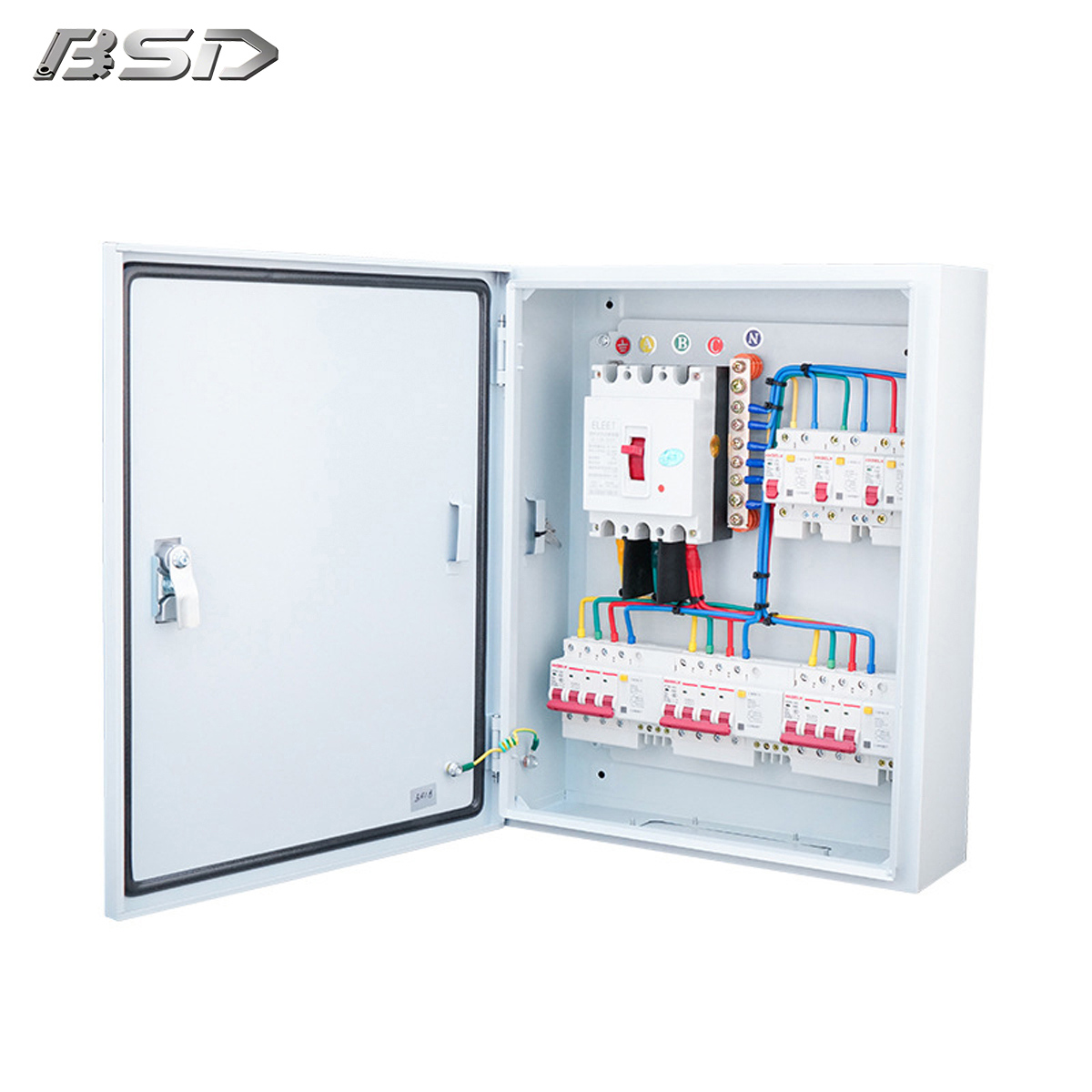
While the international standard theoretically allows for dozens of numerical combinations, practical industrial applications typically rely on a handful of proven configurations. Benchmarking your upcoming project against these standard ratings helps streamline the vendor selection process.
Standard manufacturing floors, logistics warehouses, and clean packaging facilities use IP54 and IP55 as baseline specifications. An industrial control cabinet carrying an IP54 rating is adequately protected against settling airborne dust and accidental light splashes of water. Upgrading to IP55 enhances the liquid defense to withstand low-pressure water sprays. These units are highly cost-effective and provide robust defense for dry environments where heavy washdowns are absent.
This is arguably the most frequently specified rating for mixed-use industrial environments. The six guarantees complete dust-tightness, which is an absolute necessity for woodworking facilities, cement plants, or textile mills where fine particulates are constantly suspended in the air. Meanwhile, the five ensures it can handle low-pressure water jets. This serves as the minimum requirement for basic outdoor installations where the hardware might face rain but not driving gales or flooding.
When environmental conditions shift from dirty to severe, IP66 and IP67 become mandatory. IP66 units are tested against powerful water jets, making them ideal for shipyards, outdoor telecom infrastructure, or open-pit mines. Taking defense a step further, IP67 allows for temporary submersion. Facilities situated in flood-prone geographic zones rely on IP67 to ensure that temporary water pooling does not trigger catastrophic electrical shorts.
To bridge the gap between abstract testing standards and real-world procurement, engineers use specific matching criteria. The table below outlines the ideal deployment scenarios and recommended materials for each major protection level.
| Protection Level | Primary Defense | Ideal Deployment Scenario | Recommended Material Specification |
|---|---|---|---|
| IP54 / IP55 | Settling dust, light splashes, low-pressure spray | Indoor manufacturing, clean warehousing, HVAC controls | SPCC/SGCC Carbon Steel with Powder Coating |
| IP65 | Complete dust block, low-pressure water jets | Woodworking, textile mills, basic outdoor mounting | Powder-Coated Steel or Basic SUS304 |
| IP66 | Complete dust block, powerful water jets, heavy seas | Marine decks, outdoor telecom, open-pit mining | SUS304 Stainless Steel with 1.5mm thickness |
| IP67 | Complete dust block, temporary underwater immersion | Flood-prone zones, water treatment facilities | SUS316L Stainless Steel with seamless welding |
| IP69K | High-pressure, high-temperature steam washdowns | Food processing, pharmaceutical clean rooms | Polished SUS316L Stainless Steel |
Selecting the correct rating requires a systematic evaluation of the installation site. Procurement teams must conduct a thorough environmental audit before requesting quotes from fabricators. A visual inspection of the facility floor often reveals hidden threats that standard blueprints miss.
In climate-controlled indoor spaces, the primary threat to electrical lifespan is dust accumulation. Dust acts as a thermal insulator, causing drives and power supplies to overheat and fail prematurely. If the facility is generally dry, an IP54 rating is perfectly sufficient. However, if the daily maintenance protocol involves spraying down the concrete floors with water, upgrading to IP55 ensures that accidental hose splashes do not penetrate the lower door seals.
Outdoor installations face a barrage of dynamic threats including UV radiation, wind-blown debris, heavy rain, and snow accumulation. A standard indoor box will degrade rapidly under these stresses. For general outdoor deployment, IP65 is the starting baseline. Yet, if the hardware is mounted on a telecom tower or in an open field where hurricane-force winds can drive rain horizontally, engineering teams must specify IP66 to guarantee the internal components remain completely dry during severe weather events.
A widespread misconception among buyers is that a high protection rating inherently protects internal components from all environmental threats, including rust. The reality is that the testing standard strictly measures the ingress of solids and liquids. It completely ignores chemical exposure, UV degradation, and oxidation. Matching your required rating with the appropriate physical material is a critical purchasing decision that dictates the actual lifespan of your equipment.
For the vast majority of indoor industrial environments, standard carbon steel is the most pragmatic and budget-friendly material choice. To mitigate basic environmental wear, these units undergo a professional sheet metal electrical housing fabrication process that includes a durable powder-coated finish. This baked-on protective barrier resists minor scratches, everyday industrial abrasions, and low-level ambient humidity. Standard SPCC or SGCC steel with a 1.2 millimeter to 1.5 millimeter thickness provides excellent structural rigidity without overspending on unnecessary metallurgical upgrades.
When operations move outdoors, to marine environments, or into high-hygiene washdown zones, standard powder-coated steel becomes a severe liability. If an IP66 unit is repeatedly exposed to salt spray or acidic cleaning compounds, the carbon steel will rapidly oxidize. Once rust compromises the mechanical seals and hinges, the protection rating is permanently voided.
In these demanding settings, buyers must specify a waterproof electrical enclosure manufactured from austenitic stainless steel. Grade SUS304 stainless steel provides excellent baseline corrosion resistance for most wet environments. For extreme conditions, such as coastal installations or wastewater treatment plants, Grade SUS316L is mandatory. The addition of molybdenum in the 316L alloy drastically increases resistance to chlorides and industrial solvents. Premium fabricators will also apply surface drawing or polishing to eliminate microscopic pits where corrosive agents might settle.
Relying solely on a two-digit number is a common engineering oversight. The housing operates as a micro-environment. How it interacts with the internal electronics and external variables dictates its true protective capability. A holistic design approach is required to prevent unexpected failures in the field.
One of the most frequent causes of component failure in highly rated units is internal condensation. When buyers specify an IP66 or IP67 box, they are essentially purchasing an airtight vault. During operation, internal variable frequency drives and transformers generate significant heat. When the external temperature drops at night, the trapped warm air inside the cabinet cools rapidly. Moisture suspended in that trapped air condenses into water droplets right onto the sensitive circuits. To counteract this physics problem, engineers must integrate properly rated breather valves that equalize internal pressure without breaking the environmental seal.
Furthermore, a rating is only as strong as its weakest penetration point. Every control cabinet requires cables to enter and exit the housing for power and data. If an installation team routes cables through unsealed drilled holes or uses cheap rubber grommets, the overall system rating instantly plummets to zero. Water possesses a remarkable ability to travel along the inside of a poorly sealed cable jacket through capillary action. Buyers must utilize properly rated cord grips tightened precisely to the manufacturer torque specifications.
Even experienced procurement teams fall into predictable specification traps. Avoiding these common errors ensures maximum budget efficiency and long-term hardware reliability.
Assuming that higher is always better is a costly fallacy. Specifying an IP67 vault for a clean, climate-controlled warehousing facility is a massive misallocation of capital. Highly sealed units require tighter manufacturing tolerances and heavier locking mechanisms, driving up the unit cost. Overly sealed boxes also trap heat aggressively, forcing buyers to spend additional money on active cooling systems that would be entirely unnecessary in a naturally ventilated IP54 cabinet.
Another critical error is ignoring custom cutouts. Many buyers purchase a certified IP66 box off the shelf, only to hand it over to their installation team to drill holes for touch screens, push buttons, and ventilation fans. The moment a standard drill penetrates the metal without specialized sealing protocols, the factory certification is legally voided. It is vastly more reliable to work with manufacturers who provide factory-level custom cutouts using laser-cutting technology.
Selecting the ideal industrial housing requires far more than glancing at a specification sheet. You must carefully balance the required protection rating with the exact realities of your installation environment. Materials matter immensely. A well-crafted stainless steel sheet metal enclosure will survive decades in conditions that would destroy standard carbon steel in months.
Beyond the metal itself, successful deployments always account for thermal management, condensation prevention, and proper cable entry seals. Do not just look at the two-digit number in isolation. By evaluating the holistic micro-environment of your control systems, you can eliminate unexpected downtime and maximize the return on investment for your automation hardware. If you are preparing for an upcoming project and need hardware that perfectly matches your environmental demands, explore the professional fabrication capabilities and custom solutions available at BSD Machinery to ensure your critical components remain protected.
Generally, no. While an IP55 rating indicates defense against light, low-pressure water sprays like a passing drizzle, it is not completely dust-tight. It cannot withstand heavy rainstorms, wind-blown debris, or snow accumulation. For reliable outdoor performance, industry standards strongly recommend a minimum rating of IP65, with IP66 being the preferred choice for areas experiencing severe weather.
For standard low-pressure washdowns found in general manufacturing, IP65 or IP66 is sufficient. However, for food processing, beverage bottling, or pharmaceutical facilities that utilize high-pressure and high-temperature steam cleaning, IP69K is the absolute minimum requirement. Standard seals will degrade rapidly under intense steam pressure.
Because IP66 units are highly sealed, they trap heat and ambient moisture. When outside temperatures drop, this trapped moisture turns into condensation. To prevent this, you should install certified breather valves to equalize pressure, use anti-condensation heaters coupled with a thermostat, or implement a closed-loop climate control system.
These terms carry very different engineering implications. Weather-resistant typically implies basic protection from falling rain and ambient moisture. Waterproof implies a much higher degree of structural sealing, capable of handling high-pressure water jets or temporary submersion under water. Always rely on the specific numerical rating rather than vague marketing adjectives.
No. The ratings only measure the ingress of physical solids and liquids. They do not measure chemical reactions like oxidation. A standard carbon steel box with an IP65 rating will successfully keep water out of the internal cavity, but the exterior metal will still rust if exposed to constant moisture, salt spray, or corrosive chemicals. To prevent rust in wet environments, you must specify corrosion-resistant materials like SUS304 or SUS316L stainless steel.


