

Views: 0 Author: Site Editor Publish Time: 2026-10-28 Origin: Site


The wrong casting method can completely derail a manufacturing project. Choosing the appropriate pressure level goes far beyond basic procurement. It fundamentally dictates part strength, tooling longevity, and overall unit cost. Engineers frequently grapple with the complex challenge of balancing high-volume output against the strict demands of structural integrity. In this comprehensive guide, we dissect the technical nuances between these two prominent methods. By understanding the underlying mechanics of fluid dynamics and metallurgy, you can optimize the production of aluminum die cast parts to perfectly match your specific industrial requirements.
High-Pressure Die Casting is optimal for high-volume, rapid production of thinner-walled components where impeccable surface finish and dimensional accuracy are primary priorities.
Low-Pressure Die Casting is best suited for safety-critical, structurally demanding parts that require post-process heat treatment and near-zero internal porosity.
The choice between high and low-pressure methods ultimately hinges on your anticipated production volume, tooling budget, and the mechanical lifecycle requirements of the final component.
Aluminum performs exceptionally well in both processes. However, the specific alloy grade and its inherent flow characteristics dictate which casting methodology is viable for your application.
High-Pressure Die Casting is a highly efficient, automated manufacturing process utilized to produce geometrically complex metal parts in massive quantities. In this dynamic environment, molten metal is injected into a precisely machined steel mold at incredibly high speeds. Typically ranging from 1,500 to 25,000 psi, this intense pressurization ensures the molten alloy rapidly fills every microscopic cavity of the die long before it has the chance to solidify.
The entire cycle is engineered for maximum throughput. It relies on heavy-duty machinery to execute a seamless sequence of events. First, the two halves of the premium steel die are thoroughly cleaned, lubricated, and clamped shut. This requires immense force, often between 400 and 4,000 tons of locking pressure, just to prevent the mold from bursting open during injection. Next, molten metal is transferred into a temperature-controlled shot chamber. A hydraulic piston then violently forces the liquid metal into the die cavity at velocities exceeding 40 meters per second. Upon making contact with the water-cooled steel die, the metal freezes almost instantaneously. Finally, the heavy die separates, and automated ejector pins push the solidified casting out onto a conveyor. This highly orchestrated cycle often takes only a few seconds to complete.
The standout advantage here is unparalleled production speed. Such rapid cycle times make it the absolute most cost-effective method for scaling up mass production. It offers excellent dimensional accuracy, empowering engineers to design intricate parts with extremely tight tolerances. Because of the aggressive injection pressure, the process possesses the unique capability to cast much thinner walls—sometimes down to 1.5mm or less. This rapid cooling also yields a smooth, high-quality surface finish right out of the mold, frequently eliminating the need for expensive secondary machining operations.
Despite its impressive speed, the method carries notable structural limitations. The extreme velocity of the injection phase inherently causes turbulent flow. This inevitably traps atmospheric air and atomized lubricants inside the molten metal, resulting in internal porosity. Because of these microscopic hidden voids, most of these parts cannot safely undergo high-temperature thermal processing like T6 heat treatment. Heating the part causes trapped gases to expand violently, leading to surface blistering and severe dimensional distortion. The massive robotic machinery and complex steel molds also demand very high initial capital expenditure.
Low-Pressure Die Casting is a precision-focused manufacturing process prioritizing internal structural integrity and material density over sheer production speed. Instead of violently ramming metal into a mold, it utilizes controlled physics. Molten metal is pushed slowly and smoothly upward into a mold using continuous, low-level gas pressure—typically hovering between 3 to 15 psi. The mold sits directly above a sealed holding furnace, allowing the metal to travel up a refractory riser tube and fill the cavity gently against the force of gravity.
This approach relies heavily on laminar flow to eliminate turbulence and prevent air entrapment. It begins with a sealed furnace containing the molten alloy. The furnace is gradually pressurized with a controlled inert gas, such as nitrogen or dry air. This slight pressurization gently forces the molten metal up through a ceramic tube directly into the bottom of the die. As the metal rises in a slow, highly predictable manner, it pushes atmospheric air out through strategic vents. Solidification then occurs directionally, cooling from the top of the mold down toward the gate. The continuous low pressure acts as a feeding mechanism, pushing additional liquid metal into the mold to naturally compensate for thermal shrinkage. Once the component is fully solid, the furnace pressure is released. Any unsolidified metal in the tube simply falls back into the crucible before the part is carefully ejected.
Engineers globally specify this method for parts requiring exceptional structural soundness. The gentle, upward laminar fill essentially eradicates internal porosity, resulting in a dense, uniform grain structure. Because these components are free of trapped gases, they can readily undergo comprehensive thermal processing. Solutionizing and artificial aging drastically enhance their mechanical yield and tensile strength. The process also boasts a significantly higher material utilization rate. Foundries generate far less scrap metal per cycle since there are no complex, heavy runner systems solidifying alongside the part.
The most prominent drawback is a sluggish production pace. A single casting cycle can take several minutes, making it economically impractical for ultra-high-volume mass production runs of simple consumer goods. The low-pressure nature of the fill also means the molten metal lacks the force necessary to navigate extremely thin-walled sections before freezing. To ensure proper metal flow and prevent cold shuts, designers must typically maintain a minimum wall thickness of around 3.0mm.
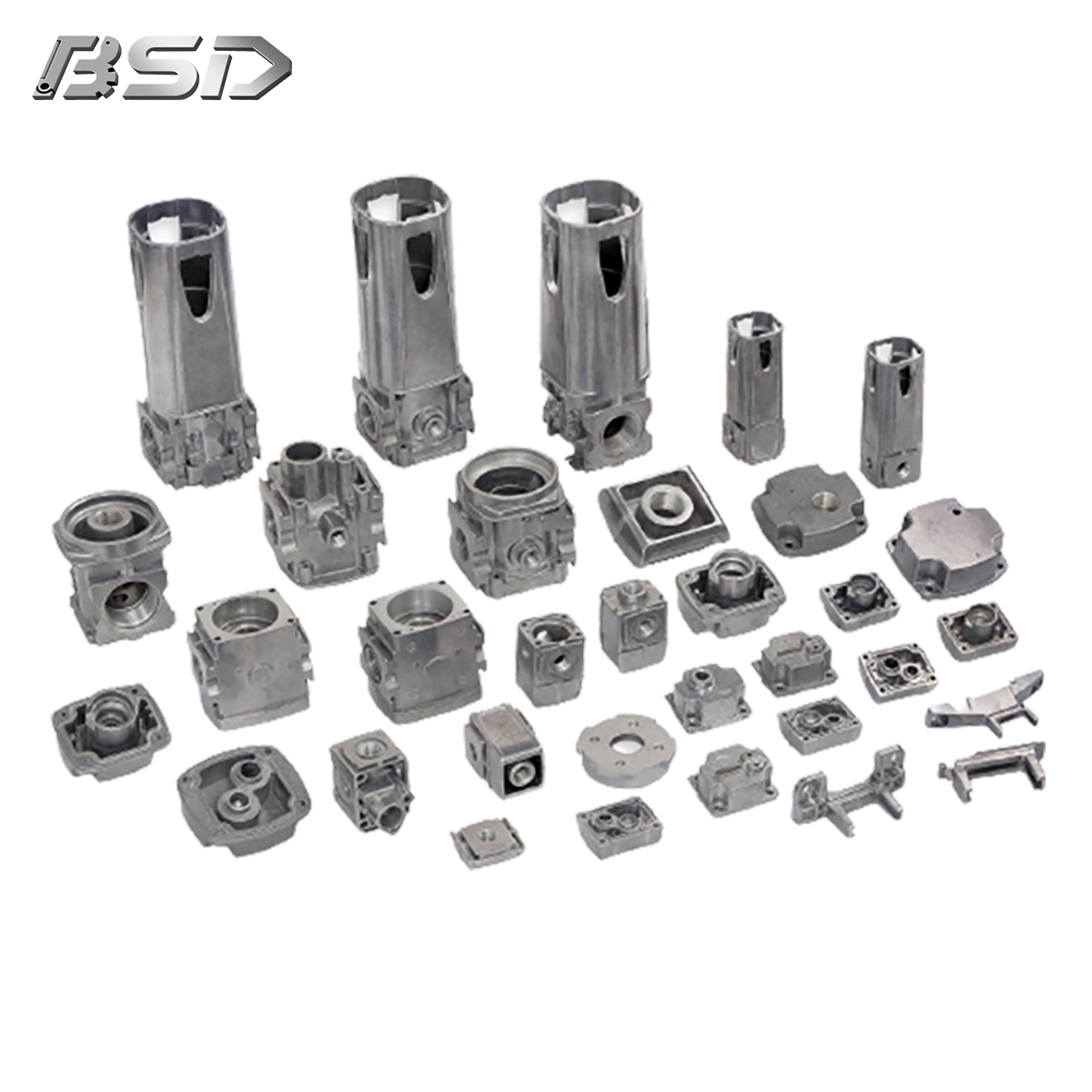
To make an informed and financially sound decision, procurement teams and engineers must evaluate how the core mechanics of each process directly impact the final component. Below is a comparative breakdown highlighting the primary operational differences.
| Feature / Parameter | High-Pressure Method | Low-Pressure Method |
|---|---|---|
| Injection Method | High velocity, extreme pressure, turbulent flow | Slow, upward gas pressure, laminar flow |
| Cycle Time | Very fast (seconds to a minute) | Slow (several minutes per part) |
| Internal Porosity | Moderate to High (trapped air is common) | Extremely Low (near-zero porosity) |
| Wall Thickness | Excellent for thin walls down to 1.5mm | Better suited for thicker walls above 3.0mm |
| Heat Treatment | Generally not possible due to blistering | Highly suitable for T6 processing |
| Tooling Cost | Very High (premium hardened steel dies) | Moderate (lower pressure reduces die wear) |
Economies of scale play a massive role in the final unit price. High-pressure systems are fundamentally built for velocity. If a project requires hundreds of thousands of identical parts, the lightning-fast cycle times will quickly offset the expensive initial tooling costs. This drives the per-part price down significantly. Low-pressure systems operate on highly controlled, slower cycles. While they cannot match sheer output rates, they offer a much better return on investment for medium-volume production runs where part integrity simply cannot be compromised.
The foundational difference in fluid dynamics dictates the ultimate strength of the cast part. When metal is sprayed into a mold violently, it atomizes. This traps atmospheric air and creates microscopic voids in the center of the component. The chilled outer skin is remarkably tough, but the internal structure remains relatively weak. A gentle, upward laminar flow allows air to escape ahead of the metal front. This yields a significantly stronger, denser part that is highly resistant to mechanical fatigue and repeated stress.
Initiating a high-speed program requires massive capital investment. Machines must exert thousands of tons of clamping force. The dies themselves must be meticulously machined from premium H13 tool steel to withstand severe thermal shock. Low-pressure tooling is generally less expensive to manufacture and maintain. Because the filling pressure is minimal, the dies experience significantly less abrasive wear. Sand cores can also be easily integrated into these molds to create complex internal hollow cavities—a structural technique that is virtually impossible to execute in a violent, high-pressure environment.
Selecting the right casting method is a critical bottom-of-funnel decision impacting your entire downstream supply chain. Engineers and procurement managers should leverage specific operational parameters to mitigate risk and optimize spending.
Looking at the broader manufacturing landscape, we see a distinct polarization in casting strategies. Driven by the automotive sector's rapid transition to electric vehicles, manufacturers are heavily leveraging advanced gigacasting for massive, lightweight battery enclosures. If your assembly line requires 100,000 to 1,000,000 parts annually, high-velocity methods easily absorb tooling costs through sheer volume. On the flip side, the demand for complex, hollow aerospace subframes has sparked a resurgence in low-pressure technologies. If your production volume falls between 5,000 and 20,000 parts per year, the lower tooling costs reduce upfront financial risk, offering superior ROI.
This is a non-negotiable metallurgical rule. If the component requires T6 heat treatment to meet specific tensile strength or crash-test safety requirements, you must choose a low-pressure or gravity method. The inherent porosity found in high-velocity casting makes thermal processing impossible without destroying the part. If your component functions perfectly well with the as-cast strength of the raw alloy, high-speed injection remains a highly viable and economically attractive option.
Review your CAD models with extreme scrutiny. Does the design feature intricate cooling fins, lightweight housing walls, or delicate sections thinner than 2.5mm? The extreme force of a hydraulic piston is absolutely required to push metal into those narrow cavities before it solidifies. If the design features thick, robust structural nodes that must bear heavy dynamic loads without failing, gentle upward filling is necessary to ensure those thick sections solidify densely without forming dangerous shrinkage voids.
Rapid injection shines brightest in industries demanding millions of identical, lightweight parts boasting excellent surface finishes right off the machine. Because the process effortlessly accommodates complex geometries and ultra-thin walls, it is heavily entrenched in the telecommunications and consumer electronics sectors.
When sourcing high pressure die casting components, procurement teams typically focus on parts serving as protective housings, thermal managers, or non-load-bearing structures. Common real-world examples include automotive transmission housings, engine blocks, oil pans, and gearbox covers. In consumer electronics, it is the undisputed standard for manufacturing sleek laptop chassis, rigid smartphone frames, and intricate heat sinks for commercial LED lighting. These applications strictly demand tight geometric tolerances, reduced weight, and a smooth finish suitable for immediate powder coating.
Gentle, laminar filling is the uncontested champion for safety-critical components. These are highly stressed parts where a hidden internal air pocket could easily lead to a catastrophic mechanical failure in the field. Consequently, the process is deeply rooted in the heavy automotive and energy generation sectors.
Aerospace engineers and chassis designers rely heavily on low pressure alloy castings for components that must endure continuous dynamic loads, harsh vibrations, and extreme torsional stress. Typical applications include automotive suspension control arms, steering knuckles, high-performance alloy wheels, and structural aerospace brackets. Heavy-duty industrial valves and complex hydraulic manifolds must remain completely pressure-tight and leak-proof under extreme fluid dynamics. They are almost exclusively manufactured using this process due to its unique ability to produce exceptionally dense, porosity-free metal.
When evaluating technical merits, the discussion inevitably centers on the material being processed. While zinc and magnesium occupy specific industrial niches, aluminum remains the undisputed heavyweight champion of the modern foundry. The global demand for lightweight components has surged exponentially, driven primarily by stringent fuel-efficiency mandates.
Aluminum possesses a unique combination of physical and mechanical properties highly adaptable to various foundry environments. Specifying aluminum translates to tangible engineering advantages. It boasts an exceptional strength-to-weight ratio. Specific alloy grades can achieve tensile strengths rivaling traditional cast irons, making it ideal for structural load-bearing applications. Components such as electronic control unit enclosures rely heavily on aluminum’s superior ability to dissipate heat rapidly. Upon exposure to oxygen, aluminum naturally forms a microscopic, impermeable oxide layer. This protects internal components from harsh environmental degradation without the absolute necessity for secondary surface coatings.
It is a dangerous misconception that any aluminum alloy can be successfully cast using any method. The metallurgical composition of the alloy must be meticulously matched to the specific fluid dynamics of the equipment.
High-velocity injection requires alloys with exceptionally high fluidity, such as A380. Because the molten metal is injected at blistering speeds, it must fill complex cavities instantly. Higher silicon content drastically improves fluidity and reduces shrinkage, while added iron prevents the aluminum from soldering to the steel die. Low-pressure environments utilize alloys like A356, formulated strictly for structural integrity. These alloys contain virtually no copper and strictly limit iron content to prevent brittle intermetallic phases. The presence of magnesium allows the alloy to be heat-treated, significantly elevating its yield strength for aerospace and automotive suspension applications.
Selecting the appropriate casting methodology is only half the battle. Executing it flawlessly requires partnering with a sophisticated, highly capable manufacturing facility. True engineering partners distinguish themselves through rigorous quality management systems, deep metallurgical expertise, and transparent process controls.
To mitigate supply chain risks and ensure the long-term reliability of your industrial components, utilize the following evaluation criteria when vetting potential partners:
Advanced Non-Destructive Testing: Visual inspections are completely insufficient for industrial components. A reputable partner must utilize in-house X-ray fluoroscopy or Industrial Computed Tomography scanning. Penetrant testing is mandatory to detect subsurface micro-shrinkage that could lead to mechanical failure.
In-House Tooling Design: The quality of a cast part is fundamentally dictated by the quality of the mold. Look for manufacturers who design and machine their own H13 tool steel dies. A proactive tooling maintenance program prevents dimensional drift over a 100,000-shot production run.
Comprehensive Quality Certifications: Empirical evidence of quality control is non-negotiable. The facility should hold ISO 9001 certification at a bare minimum. For automotive parts, demand IATF 16949 compliance. For aerospace components, AS9100 certification is the definitive standard.
Heat Treatment and Secondary Machining: If you require high structural integrity, the foundry must possess in-house T6 heat treatment furnaces. Having CNC machining capabilities under the same roof drastically reduces logistical complexities and ensures tighter geometric tolerances.
Choosing the right casting method is a critical engineering milestone rather than a search for a universal solution. Procurement teams must meticulously match the process to their exact dimensional and mechanical needs. High-pressure casting delivers unmatched speed and economies of scale for lightweight enclosures. The low-pressure alternative ensures maximum strength, structural integrity, and heat-treatability for safety-critical hardware. Evaluate your production scale carefully and consult with experienced metallurgical engineers. Whether you need high-volume thin-walled housings or robust structural nodes, explore the precise capabilities at BSD Machinery to establish the most cost-effective manufacturing strategy for your supply chain.
Cost-effectiveness is entirely dependent on your production volume and the mechanical requirements of the component. High-pressure methods require a massive initial capital investment in complex, hardened steel tooling. However, because cycle times are measured in seconds, the per-part cost drops dramatically at high volumes, typically exceeding 20,000 units. Low-pressure casting has significantly lower tooling costs and a much higher material yield, often above 90% as there are no large runners to trim. Therefore, it is generally more cost-effective for low-to-medium production runs, or in scenarios where the cost of part failure due to internal porosity is unacceptably high.
Under standard manufacturing conditions, the answer is no. The fundamental mechanics involve injecting molten metal at extreme velocities. This violent, turbulent flow inevitably traps atmospheric air and atomized die lubricants inside the metal matrix, creating microscopic internal pores. If the part is subjected to the elevated temperatures required for a T6 heat treatment, these trapped gases will rapidly expand. This expansion causes the surface of the aluminum to blister, warp, and suffer severe dimensional distortion. Unless specialized high-vacuum technology is employed, these parts cannot be heat-treated.
The primary distinction lies in the fluid dynamics of how the mold is filled. Gravity casting relies solely on the earth's gravitational pull to pour molten metal down into the mold cavity. This pouring action is inherently turbulent. It exposes the molten aluminum to oxygen, which can fold oxide films into the material and cause uneven filling. Low-pressure casting uses a sealed holding furnace and a riser tube. A small, highly controlled amount of pressurized gas is applied to the surface of the melt, pushing the metal slowly and smoothly upward against gravity. This laminar flow prevents the formation of oxides and feeds the casting continuously as it shrinks during cooling, resulting in a significantly denser and stronger final part.
From a purely metallurgical standpoint, forged aluminum parts are generally stronger. Forging involves mechanically deforming solid metal under extreme pressure, which aligns the internal grain structure along the contours of the part, providing exceptional directional strength. Castings possess an equiaxed, dendritic grain structure. However, forging is highly restricted in terms of geometric complexity and carries exorbitant tooling and secondary machining costs. Low-pressure castings, especially when cast from A356 aluminum and subjected to T6 heat treatment, bridge this gap perfectly. They offer an outstanding balance of near-forging isotropic strength, the ability to create highly complex internal geometries, and significantly lower overall production costs.
Tooling longevity varies drastically based on the thermal and physical stress applied to the steel. High-pressure dies endure severe thermal shock and extreme injection velocities, which eventually leads to heat checking and abrasive wear. A well-maintained H13 steel die in a high-pressure environment typically lasts for about 100,000 to 150,000 shots. Conversely, low-pressure dies experience a very gentle, slow filling process with minimal abrasive force. Because the thermal cycling is less aggressive, low-pressure tooling can often exceed 150,000 shots and requires significantly less mid-production maintenance.
The automotive industry is currently dominated by high-pressure die casting for EV battery enclosures. These components are massive but require extremely thin walls to keep the overall vehicle weight down. The high-velocity injection is the only way to push molten aluminum across such a large, complex surface area before the metal freezes. This trend, often referred to as gigacasting, utilizes specialized high-tonnage machines to consolidate dozens of stamped steel parts into a single, lightweight aluminum casting, maximizing production speed and assembly efficiency.


