

Views: 0 Author: Site Editor Publish Time: 2026-06-16 Origin: Site


For engineers and procurement teams sourcing complex metal components, the margin for error is often measured in microns. Traditional machining methods force a choice between high setup costs, extended lead times, or compromised precision. As geometries become more complex, especially in aerospace, medical device, and high-performance automotive sectors, relying on sequential 3-axis or 4-axis operations introduces unacceptable risks. You cannot afford slight deviations when producing critical performance parts.
5-Axis CNC Machining solves these exact bottlenecks. By fundamentally changing how the cutting tool interacts with the workpiece, it mitigates human error. It eliminates tolerance stacking entirely. It makes seemingly impossible geometries manufacturable at scale. You will discover how specific machine mechanics ensure sub-micron precision. We will outline the vital differences between positional and simultaneous toolpaths. You will also learn the core evaluation criteria for validating external manufacturing capabilities.
Reduced Tolerance Stacking: Consolidating operations into a single setup ("Done-in-One") prevents the cumulative alignment errors inherent in multi-setup machining.
Optimal Tool Positioning: 5-axis allows for shorter, more rigid cutting tools, reducing vibration, minimizing deflection, and drastically improving surface finish.
3+2 vs. Simultaneous Capabilities: Understanding the distinction between positional 3+2 machining and continuous 5-axis machining is critical for balancing cost against geometric requirements.
Verifiable Quality: True accuracy requires more than just the machine; it demands rigorous environmental controls, advanced position measurement (like linear encoders), and robust CMM validation.
Moving a part between different fixtures for 3-axis operations inherently introduces minor alignment discrepancies. Over three to five setups, these micro-errors compound significantly. We call this phenomenon tolerance stacking. It often pushes a highly toleranced feature completely out of specification limits. Each time you unclamp and re-clamp a workpiece, you lose the original datum reference. This loss compromises the entire dimensional integrity of the component.
Manual re-fixturing introduces substantial risks into the manufacturing pipeline. Human intervention inherently disrupts absolute precision. Operators face several common hazards during these manual transitions:
Clamping distortion caused by inconsistent torque application across the fixture.
Debris interference lodging between the fixture plates and the workpiece.
General misalignment resulting from operator fatigue or improper seating.
These variables make stringent quality control extremely difficult. Standard 3-axis toolpaths simply cannot reach intricate internal areas. Complex features require expensive custom workholding solutions. Deep undercuts and off-angle holes present immense manufacturing challenges. Organic aerospace curves often remain physically impossible to reach using traditional methods. You must find alternative strategies to achieve sub-micron precision consistently. Exploring advanced CNC Machining portfolios reveals how single-setup strategies overcome these exact design limitations.
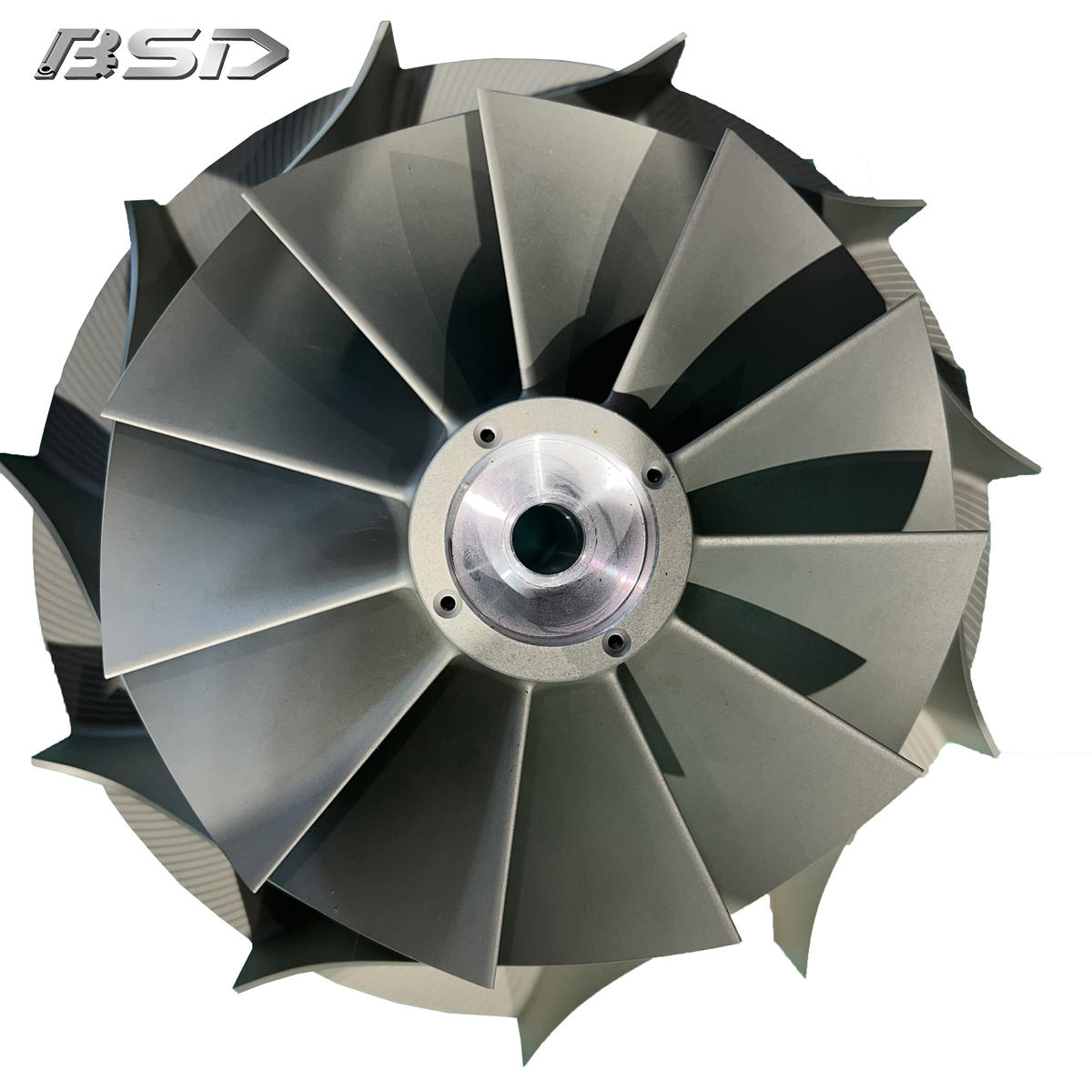
Adding rotational axes transforms basic manufacturing capabilities into high-precision operations. The A and B axes typically involve dynamic table tilt and rotation. Some machine configurations utilize spindle articulation instead. These additions allow the cutting tool to approach the workpiece from virtually any vector. You gain unprecedented access to complex geometries.
The "Done-in-One" advantage changes fundamental production workflows. You can complete over 95 percent of the required machining in a single clamping operation. This method locks the primary datum points securely in place. Features on opposite sides of the part remain perfectly concentric. They also stay flawlessly parallel throughout the entire cycle.
Tool rigidity drastically improves dimensional accuracy across the board. This specific multi-axis positioning allows the spindle to drop much closer to the workpiece. Shorter cutting tools resist deflection highly effectively. They also minimize vibration and chatter during aggressive material removal. This enhanced rigidity directly translates to tighter dimensional accuracy. It also delivers superior surface finishes without secondary polishing. A rigid setup ensures the tool path remains absolute.
You must choose the right approach for your specific part geometry. The distinction between positional and simultaneous operations dictates cycle times and part quality. Both methods offer distinct advantages depending on the application.
| Capability | Definition | Best Used For |
|---|---|---|
| 3+2 Machining | The 4th and 5th axes position the part and lock. Standard 3-axis milling then occurs. | Multi-sided parts, flat features, off-angle drilling, and prismatic components. |
| Simultaneous 5-Axis | All five axes move concurrently to follow a complex, continuous contour. | Impellers, turbine blades, complex organic molds, and seamless curved surfaces. |
In 3+2 machining, the fourth and fifth axes act primarily as positioning tools. They orient the part and lock securely into place. Then, standard 3-axis milling executes the material removal. We frequently call this positional 5-axis machining. This method works exceptionally well for multi-sided parts having flat geometric features. It handles off-angle drilling perfectly. It offers extremely high rigidity during aggressive cutting operations. It also requires lower programming resources compared to continuous motion.
Simultaneous 5-axis machining involves continuous, dynamic movement. All five axes move concurrently to follow a highly complex contour. This advanced technique excels at producing intricate impellers and turbine blades. It effortlessly machines complex organic molds. It works perfectly for parts requiring continuous smooth surface finishes. You will not see any blend marks or stepping on the final product.
You must build a strategic decision framework for your projects. Evaluate part topology carefully before selecting a method. Consider your specific cycle time constraints. Analyze the required surface finish specifications thoroughly. Simple multi-sided parts benefit most from the positional 3+2 approach. Highly contoured aerospace components strictly demand simultaneous continuous motion to meet design intents.
Prolonged continuous machining generates substantial kinetic heat. This thermal buildup causes spindle and axis expansion. Top-tier machines actively combat this through advanced thermal compensation systems. They rely on high-capacity chiller units circulating specialized cooling fluids. These systems maintain strict accuracy despite shop floor temperature fluctuations. They prevent thermal drift from ruining tight component tolerances during long cycles.
Direct position measurement ensures physical reality precisely matches digital commands. Standard motor encoders often fall short for critical aerospace tolerances. We strongly recommend utilizing linear glass scales instead. High-resolution rotary encoders also provide superior positional feedback. Direct measurement accounts for mechanical backlash effectively. It compensates for minute ballscrew wear over time. This technology ensures the physical machine position matches the CNC controller data perfectly.
Kinematic calibration sustains long-term equipment reliability. Rotational centerlines can shift slightly after heavy industrial use. Routine kinematic checks detect these minute mechanical deviations. Technicians typically use a touch probe and a precision calibration sphere. This process ensures the rotational centerlines remain perfectly aligned. Maintaining machine physics guarantees repeatable accuracy across large production runs. Partnering with a dedicated facility, as detailed on our 5-Axis CNC Machining page, ensures rigorous calibration protocols are strictly followed.
A multi-axis machine can cut a complex part easily. However, you must ask if the vendor can actually measure it. Look for specialized 5-axis coordinate measuring machine capabilities. Advanced scanning equipment is also absolutely essential. Verifiable metrology proves the final physical dimensions match your original CAD model perfectly.
Software ultimately drives the physical machine movements. Evaluate your partner's CAM programming expertise thoroughly before engagement. They should use industry-standard, high-end software packages. These programs must handle advanced collision avoidance simulations. They should also provide highly optimized toolpath generation. Efficient code prevents scrap and significantly reduces overall cycle times.
Industry compliance guarantees rigorous internal process control. Verify specific industry certifications for critical components. Aerospace projects strictly require AS9100 certification. Medical devices demand rigorous ISO 13485 compliance. These standards ensure full material traceability. They ensure quality control systems match the high-end physical machine capabilities.
Assess specific material experience before awarding any complex contracts. Machining exotic alloys introduces distinct shop floor challenges. Cutting Inconel creates extreme localized heat. Titanium causes rapid cutting tool wear. These materials behave very differently than standard commercial aluminum. Your partner needs a proven track record handling these specific metals successfully.
CNC Machining with 5-axis capabilities represents a fundamental shift in accuracy preservation. It eliminates the detrimental variables associated with multiple setups.
Eliminating custom workholding fixtures and manual re-setup time drastically streamlines your project timelines.
Substantially lower scrap rates improve overall manufacturing efficiency for highly complex metal parts.
Submit a CAD model for a comprehensive Design for Manufacturing review today. Evaluate if your component qualifies for immediate multi-axis optimization.
A: Operational investments initially appear higher due to advanced equipment requirements and complex programming needs. However, this approach often reduces overall project expenses significantly. It eliminates the need for expensive custom fixtures entirely. It removes manual re-setup time from the production schedule. It also drastically lowers high scrap rates caused by multi-setup tolerance stacking. This holistic efficiency usually offsets the higher initial operational inputs.
A: You can machine virtually any solid metal. Common materials include aerospace aluminum, stainless steel, and titanium. We also frequently machine tough Inconel and hardened tool steels. The limiting factors are typically specific tool selection and overall machine rigidity. The multi-axis configuration itself rarely limits your material choices.
A: The system handles deep undercuts by dynamically tilting the cutting tool. It can also rotate the workpiece directly. This dynamic movement allows the spindle to access previously blocked internal areas. A standard vertical approach cannot reach these geometries. This eliminates the need for specialized lollipop cutters to finish intricate internal features.
A: Part geometry and specific material properties dictate final dimensional results. However, top-tier machines operate exceptionally well in temperature-controlled environments. They routinely hold strict tolerances of ±0.0001 to ±0.0005 inches. This equals ±2.5 to ±12.5 microns. Rigorous environmental controls and advanced linear scales make this extreme precision highly repeatable.


